Start every trading day with a quick, actionable snapshot of global markets, key earnings, and the biggest movers across US, Europe, and Asia. Get the insight before your first coffee is gone.
November 25, 2026 | Issue 179
Credit Spreads Are Widening. Defaults Coming in 2027

Nikolay Stoykov
Managing Partner at Alaric Securities

November 2026 is shaping up to be a brutal month for equity markets worldwide, and widening credit spreads may be the most underrated reason why. Below is a 10-year monthly chart of the S&P 500, courtesy of TradingView:
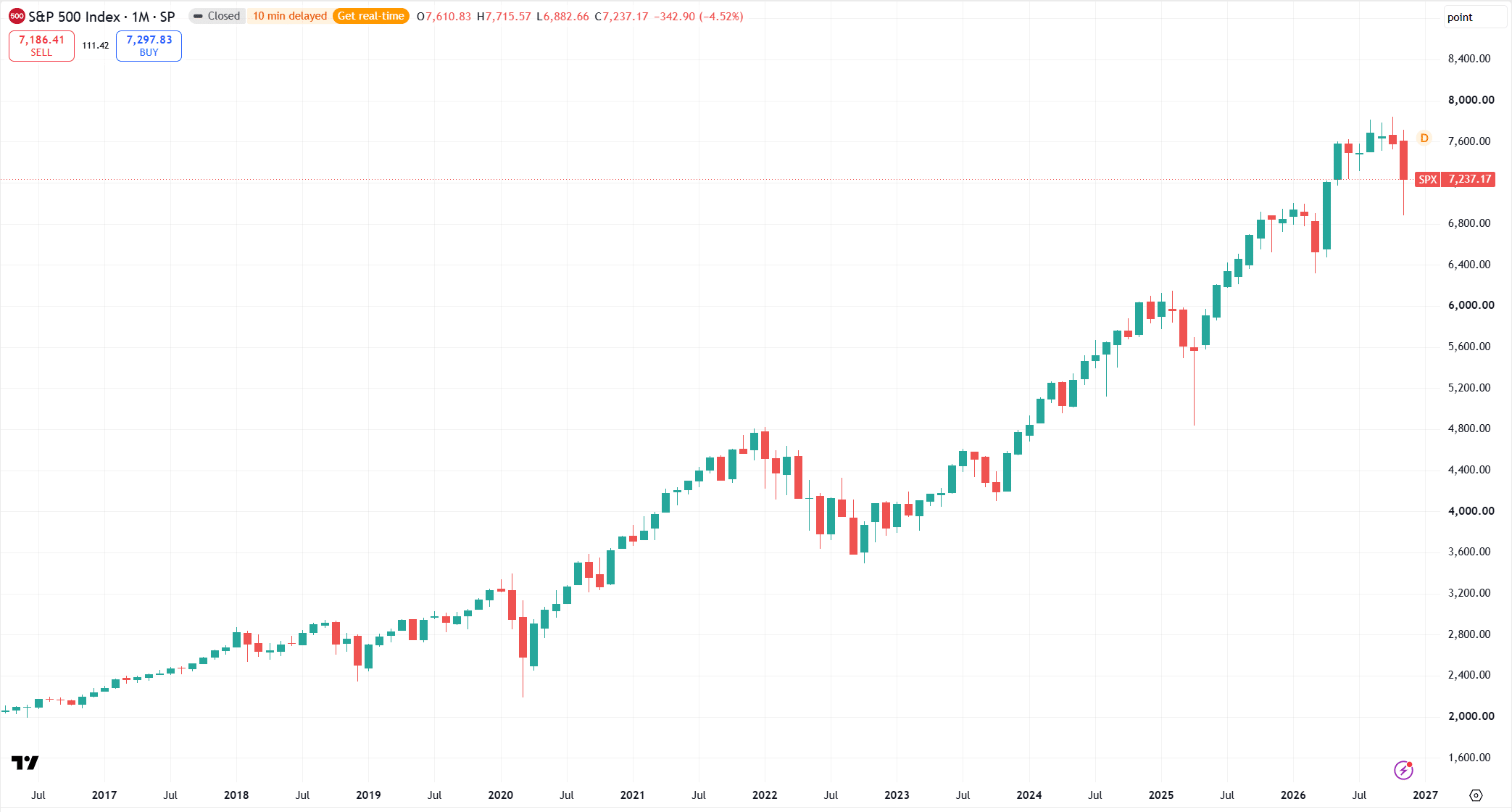
The S&P 500 fell nearly 10% this month, from around 7,610 at the start of November to an intraday low of about 6,910 on Friday, 20 November. Then on Monday, 23 November, NVIDIA announced that Jensen Huang is returning as CEO, and the market recovered roughly half its losses. At the time of writing, the index is down about 5% for the month.
Plenty of things have been blamed for the selloff. One important factor is plain to see but rarely discussed: credit spreads have widened sharply.
We first flagged this just over two months ago, in our article – High Yield Credit Spreads Are Showing Cracks. Broad markets were trading close to all-time highs at the time, but we argued that widening high yield credit spreads were likely to contribute to a selloff. That is how it played out.
What Are Credit Spreads?
Credit spreads measure the extra yield investors demand to hold corporate bonds instead of US Treasuries. When investors worry that companies may struggle to repay their debt, they ask for more compensation, and credit spreads widen. The spread on the lowest-rated bonds (CCC and below) is one of the earliest warning signs of stress in the corporate sector.
Is a Santa Claus Rally Coming in 2026?
So, with Jensen Huang back at the helm, is it time to get long and hope for a Santa Claus rally?
Not so fast.
CCC Credit Spreads Have Hit 14%
Let’s go back to the index we looked at last time. Here is a 10-year chart of the ICE BofA CCC & Lower US High Yield Index Option-Adjusted Spread, courtesy of TradingView.com:
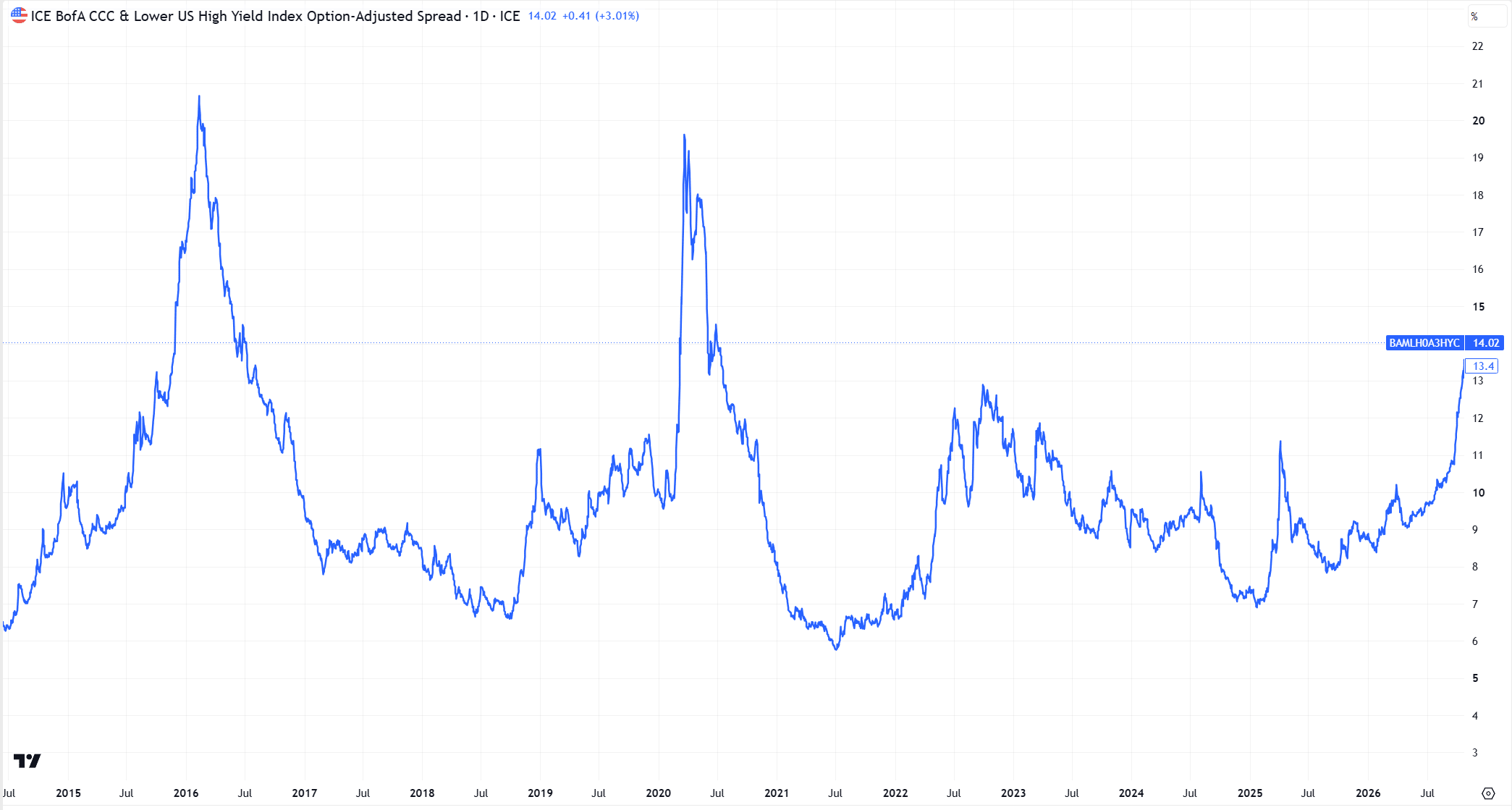
When we published our September blog, the index stood at around 10.7 percentage points above Treasury yields. Today it stands at 14.02.
In fact, the NVIDIA news lifted equities worldwide, but credit markets kept weakening. That was especially true for the most distressed borrowers, those rated CCC or lower.
Current CCC credit spreads show more stress than at any point during the tariff turmoil of spring 2025. The only bigger spike in recent years came during the COVID-19 pandemic.
Why Credit Markets Deserve More Attention
The reasons the mainstream media gives for the market’s moves are all valid. They include NVIDIA’s CEO leaving and then returning, uncertainty around the midterm elections and questions over data center building permits. They’re also the ones everyone is already talking about. What gets very little attention is how sharply credit markets have deteriorated over the past few months, and that deserves far more attention.
Corporate Defaults in 2027: What History Suggests
History suggests that credit spreads at these levels have tended to come before a rise in corporate defaults and bankruptcies. If that happens again in 2027, broad equity indices could face further losses.
Yes, markets are approaching what has traditionally been a value zone. In our view, though, the risk of further losses outweighs the chances of a traditional Santa Claus rally into year-end.
Disclaimer
The articles, podcasts, and newsletters from Alaric Securities OOD are classified as marketing communications. The views expressed are solely those of the individual authors affiliated with Alaric Securities OOD and do not necessarily reflect the views of the company, its subsidiaries, or affiliates. This content is provided for informational purposes only. It does not constitute investment advice, a recommendation, or a solicitation to buy or sell any security, digital asset (such as cryptocurrency), or other financial instrument. Third-party content is included solely for informational purposes and does not reflect the views of Alaric Securities OOD. All investments involve risk, including the possible loss of principal. Past performance is not indicative of future results. References to third-party companies, logos, or trademarks are used under fair use/fair dealing principles for analysis and commentary.
Stay Ahead with Alaric Securities Newsletters
Traders and investors don't need more information - they need better information. That’s what we deliver!
Step back from the daily noise. Each issue explores market trends, industry shifts, trading opportunities, and exclusive updates — learn what's shaping the markets, not just what's trending online. Ready to get the edge?