
Is Gold Investing Smart or Speculative


We have written about our cautious stance on gold investing before, but recent market action has compelled us to revisit the topic.
First, there is a strong narrative around gold being a safe asset, an inflation hedge, or a good long-term investment. In times like these, it helps to have a clear principle or a credible reference point. One respected voice in investing is Warren Buffett.
His framework is simple. For an asset to be considered an investment, it should produce income. Stocks, land, or real estate generate cash flow for their owners. Gold — and metals in general — do not.
By that definition, buying gold, even over the long term, is closer to speculation than to investment. This does not deny that long-term holders of gold have achieved very good returns. It simply frames those gains as successful speculation rather than income-based investing. An interesting distinction, wouldn’t you say?
The Real Estate Analogy: Understanding Whether Gold Investing Is Smart Through Price Appreciation
Now, imagine the following scenario. Real estate prices in Brooklyn, NY are up 60% over five years. Manhattan is up 155% over the same period. One prime stretch — Billionaire Row around 59th Street — is up about 190%. For readers less familiar with New York City: Manhattan is considered premium, while Brooklyn is often viewed as “up-and-coming.”
If you were a real estate investor today, where would you feel more comfortable allocating capital? Billionaire Row after a 190% surge? Manhattan broadly? Or Brooklyn, where prices have risen but still offer a larger margin of safety? Many investors would likely lean toward Brooklyn.
Now substitute:
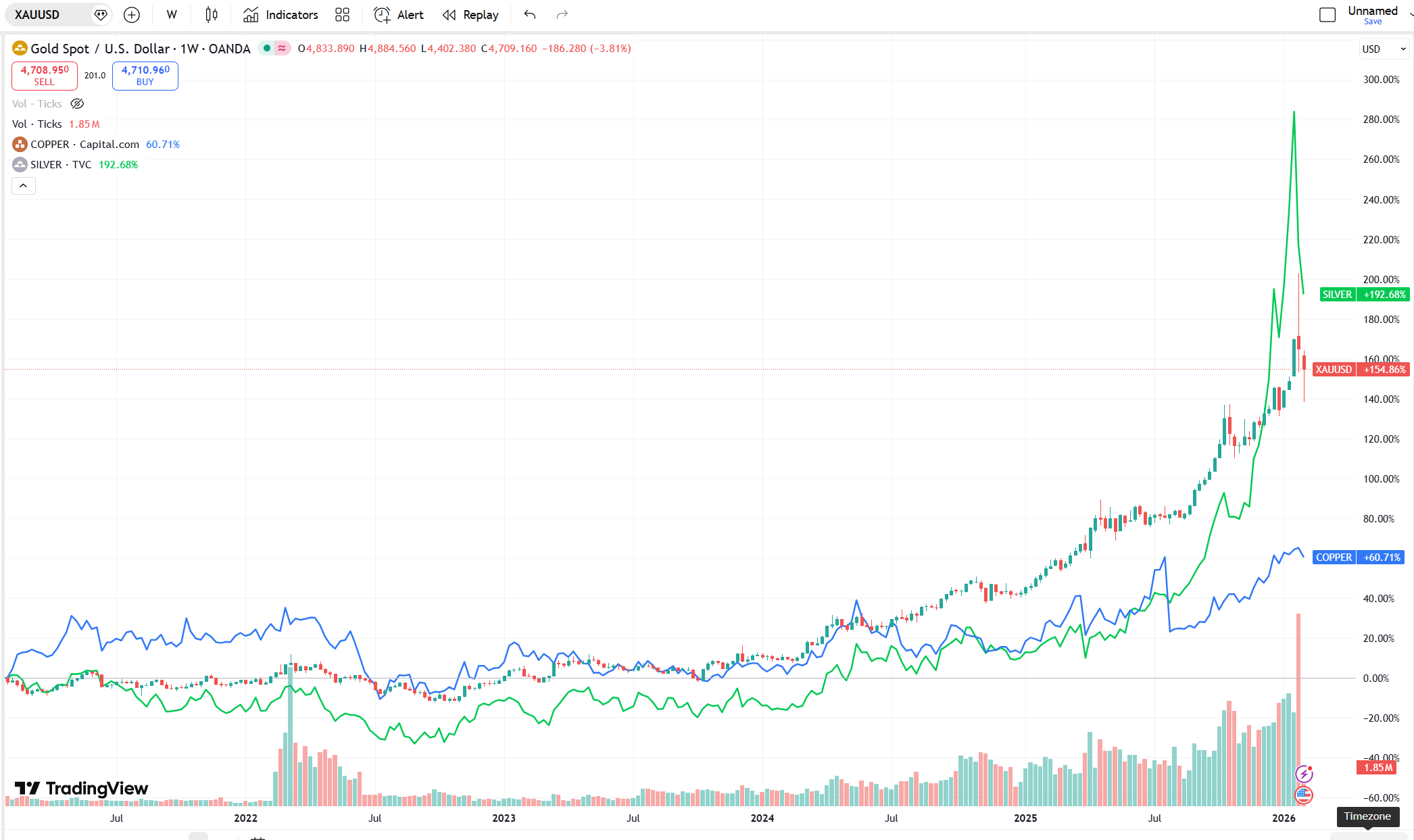
Over the past five years (2020–2025), copper is up about 60%, gold around 155%, and silver near 190%. If the Brooklyn logic made sense in real estate, it is at least fair to ask whether the same logic should apply here.
Gold Alternatives: The Swiss Franc Currency Hedge
There is also the currency argument. Many central banks explicitly target around 2% inflation, which implies a steady loss of purchasing power. Over the last five years, inflation has often exceeded those targets. Not all central banks operate the same way, however. The Swiss National Bank has historically targeted lower inflation, and the CHF has tended to hold its value better than most major currencies. With rates near zero and inflation very low, CHF has functioned as a currency hedge for some investors.
Is Gold Investing Smart? The Speculation vs Investment Debate
Gold is better viewed as speculation than an investment in the income-producing sense. Yes, it has served as a store of value, particularly in emerging markets where inflation is high and alternatives are limited. But in countries without capital controls, currency diversification — for example into CHF — can also serve as a hedge.
Gold Investing at Current Prices: Why Copper May Offer Better Value
If one is allocating to metals, copper arguably offers a stronger margin-of-safety profile at current prices than gold or silver. Copper has a long history in coinage — nearly every country has used it in some form. Gold has historically hedged inflation over very long horizons, but at current relative prices, copper may offer the more favorable risk-reward balance.