
Start every trading day with a quick, actionable snapshot of global markets, key earnings, and the biggest movers across US, Europe, and Asia. Get the insight before your first coffee is gone.
May 14, 2026
Cerebras IPO: The AI Chip Play Beyond Nvidia
Alaric Securities

The Cerebras IPO opens on Nasdaq today. Here’s what retail traders need to know before they touch the order button
Cerebras Systems priced its IPO at $185 last night, and this morning the stock begins trading on Nasdaq under the ticker CBRS. Reported demand was more than 20x oversubscribed.
The roadshow started at $115–$125, got revised to $150–$160, then priced above even that. The company raised roughly $5.55 billion from 30 million Class A shares, with underwriters holding a 30‑day greenshoe option for up to 4.5 million additional shares.
That level of demand doesn’t happen often. When it does, the opening price tends to reflect it.
So what does Cerebras actually do
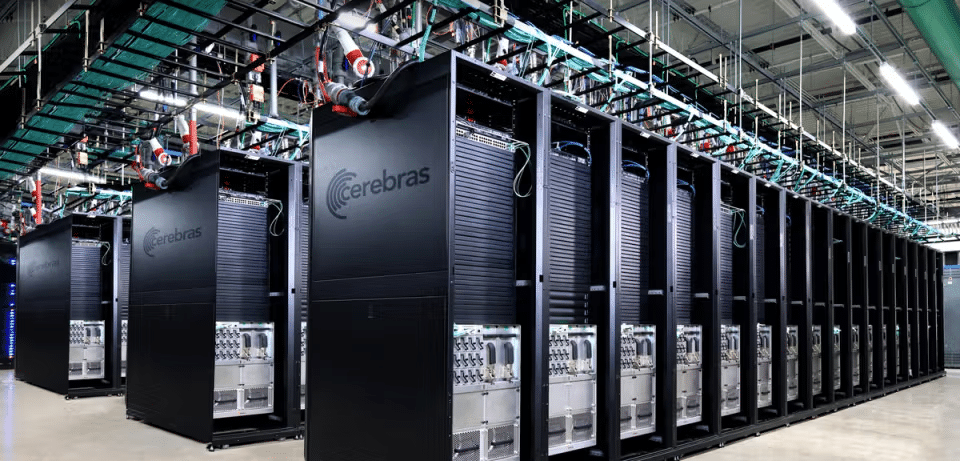
Cerebras builds wafer‑scale processors — chips designed specifically for large AI models, not adapted from general‑purpose GPU architecture. Its flagship Wafer‑Scale Engine 3 (WSE‑3) is a single chip the size of an entire silicon wafer — dozens of times larger than a leading GPU die — and the company claims it can deliver over 10x faster training and inference on some workloads versus GPU‑based alternatives, based on its own benchmarks on leading open‑source models. Think of it as a custom‑built race car versus a modified street car; both go fast, but one was designed from scratch for the track.
The company reported 510 million in revenue for 2025, up 76% year-on-year from 290.3 million in 2024, and swung to profitability, posting approximately 238 million in GAAP net income, compared with a 482 million loss in the prior year.
Major customers include OpenAI and Amazon Web Services. The OpenAI master relationship agreement carries a potential value of 20 billion or more per S‑1‑based analyses, while committed deal flow has been reported at 10 billion or more through 2028.
Those are not names that sign contracts lightly.
Why traders are carefully watching the Cerebras IPO at the open
3 things make CBRS worth watching at open:
1) The pricing already captured most of the pop. When a stock price is more than 60% above its initial range, a significant portion of the typical first‑day excitement has already been absorbed into the offer price. The question isn’t whether demand was strong — it clearly was. The question is whether public‑market buyers are willing to pay even more after institutional allocations are filled.
2) The float is tighter than it looks. Thirty million shares may sound substantial but it isn’t. In practice, long‑only funds, strategic holders, and accounts unlikely to flip quickly shrink the truly tradable supply. The greenshoe option gives underwriters a stabilization tool, but in a tight float, even modest buying pressure amplifies moves in both directions.
3) $185 is not a forgiving entry point. At roughly 80–95x 2025 revenue, depending on dilution assumptions, the valuation leaves limited room for execution stumbles. Momentum cuts both ways.
Watch where CBRS opens relative to 185, whether that level holds as support, and what volume looks like in the first 30–60 minutes; those are the signals — not just the story.
The investor case in plain English
Cerebras is one of the few public vehicles for exposure to AI infrastructure beyond Nvidia. Nvidia is the category king, but it’s also already one of the most widely held stocks on the planet.
Cerebras offers something different: a bet on an alternative compute architecture at a stage where the market is still being defined.
NVIDIA’s advantage isn’t just hardware — it’s software, developer ecosystems, and years of deep adoption. Cerebras doesn’t need to beat Nvidia to succeed, but it does need to carve out a durable, growing slice of AI compute spending and prove that its architecture scales beyond a handful of landmark contracts.
3 things to watch after the Cerebras IPO
- Customer concentration. About 86% of 2025 revenue came from two customers, both largely UAE‑based entities, according to S‑1‑based analyses. Broadening that base is what turns a strong debut into a resilient business.
- Valuation sustainability. At roughly 80–95x 2025 revenue, depending on dilution assumptions, hypergrowth must continue without interruption. Any deceleration will hit the stock hard and fast.
- Execution pace. Marquee contracts don’t automatically become recurring revenue. Watch how fast deployments scale, whether usage deepens, and whether new hyperscaler deals get announced in the quarters ahead.
The bottom line
CBRS is a high‑conviction, high‑volatility debut.
Demand was strong, the technology is distinctive, and the customer names carry real weight. Aggressive pricing and heavy customer concentration set a high bar.
The IPO arrives as one of the few public vehicles for exposure to AI infrastructure beyond Nvidia — and the opening session will be an early test of what that access is worth to the market.
Disclaimer
The articles, podcasts, and newsletters from Alaric Securities OOD are classified as marketing communications. The views expressed are solely those of the individual authors affiliated with Alaric Securities OOD and do not necessarily reflect the views of the company, its subsidiaries, or affiliates. This content is provided for informational purposes only. It does not constitute investment advice, a recommendation, or a solicitation to buy or sell any security, digital asset (such as cryptocurrency), or other financial instrument. Third-party content is included solely for informational purposes and does not reflect the views of Alaric Securities OOD. All investments involve risk, including the possible loss of principal. Past performance is not indicative of future results. References to third-party companies, logos, or trademarks are used under fair use/fair dealing principles for analysis and commentary.
Stay Ahead with Alaric Securities Newsletters
Traders and investors don't need more information - they need better information. That’s what we deliver!
Step back from the daily noise. Each issue explores market trends, industry shifts, trading opportunities, and exclusive updates — learn what's shaping the markets, not just what's trending online. Ready to get the edge?