Start every trading day with a quick, actionable snapshot of global markets, key earnings, and the biggest movers across US, Europe, and Asia. Get the insight before your first coffee is gone.
April 2, 2026
How to Avoid Pump and Dump Stocks
Alaric Securities
Essential Red Flags Every Investor Should Know
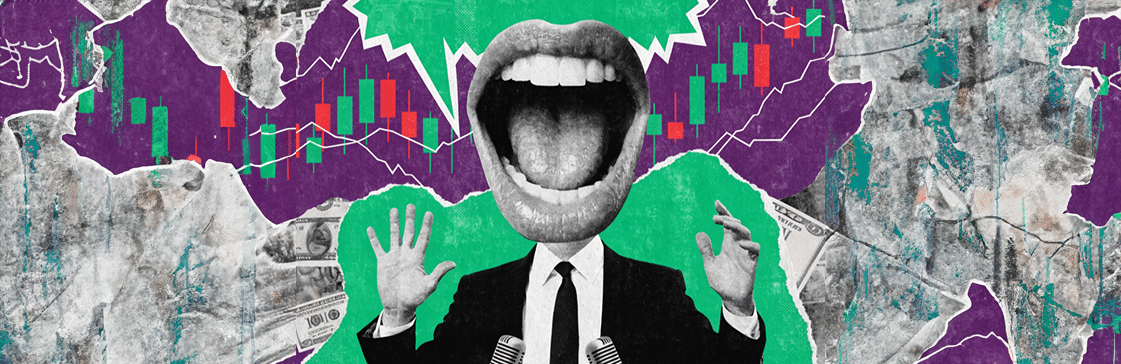
A stock trading at $1.50 gets coordinated promotion across Telegram and WhatsApp groups. It surges to $9 in days. Social media supports the buzz. You buy at $8. Within a week, it crashes to $2. The group admins disappear.
This is a pump-and-dump scheme. And it happens almost every single day.
Whether you’re new to trading or have years of experience, these scams catch thousands of investors off guard. They spread through Telegram groups, WhatsApp chats, and social media platforms. They’re wrapped in the language of opportunity — “Don’t miss out,” “This is your chance,” “Act now before it’s too late.”
They’re illegal. They’re everywhere. And they’re designed to separate you from your money.
Here’s how to spot them before they spot you.
What Is a Pump-and-Dump Scheme
The playbook is always the same: fraudsters accumulate shares in a small, obscure company while the price is low. Then they flood forums, social media, and group chats with hype — fake news, exaggerated claims, “inside information” that doesn’t exist. Finfluencers promote it. Self-proclaimed gurus push it in paid groups. New investors pile in, chasing the surge. The stock spikes. The fraudsters dump their shares at the peak and disappear. The price collapses, leaving latecomers holding worthless paper.
It’s a straightforward scam, but it works because it preys on FOMO (fear of missing out) and the promise of fast returns. Despite being illegal, it happens constantly, especially in corners of the market where oversight is light and information is scarce. Even experienced investors can fall victim when they don’t run basic verification checks.
# Rule 1: Penny Stocks and Micro-Caps Are High-Risk Territory
Penny stocks (trading under $5 per share) and micro-cap stocks (market capitalization under $300 million) are the natural habitat of pump-and-dump schemes. The reason is simple: these stocks are easy to manipulate.
When a stock has a tiny float and trades only a few thousand shares a day, it doesn’t take much capital to move the price dramatically. A coordinated buying effort of a few hundred thousand dollars can send the stock up 50% or more overnight. Try doing that to a company like Microsoft or Coca-Cola — it would take billions.
Micro-caps also tend to have limited publicly available information. Many trade over-the-counter (OTC) rather than on major exchanges, meaning they don’t have to meet the same disclosure or listing standards. That information vacuum is exactly what scammers exploit. When there’s no credible data to counter the hype, the hype wins.
How to check: Before buying any stock, check its market cap. If it’s under $300 million and you’re not deeply familiar with the company or its fundamentals, proceed with extreme caution or skip it entirely.
# Rule 2: Concentrated Insider Ownership Is a Red Flag
One of the simplest but most overlooked checks: who actually owns the stock?
If insiders (founders, executives, early investors) collectively hold more than 10% of a company’s shares, they have enormous power over the stock price. They can flood the market with shares at any moment, effectively “dumping” on retail investors who bought in during the hype phase. Because they already own the shares, there’s no cost to them – just profit as they exit, leaving everyone else scrambling.
Fraudsters often control the public float (the number of shares available for public trading), enabling them to manipulate price movements with relatively little effort.
How to check: Visit Yahoo Finance, for example, and search the ticker. Find Holders tab. Look at the insider ownership percentage. Anything above 10% deserves serious scrutiny.
# Rule 3: Geography Offers No Protection
A common misconception among newer investors is that pump-and-dump schemes only target foreign or emerging-market stocks. That’s not true. These schemes exist in every market – U.S., Europe, Asia, everywhere.
A stock listed on a major U.S. exchange like the NASDAQ or NYSE is not automatically safe, particularly if it’s small, thinly traded, or lacks meaningful institutional backing. Investigations have found pump-and-dump activity in stocks of companies operating in China, the U.S., and many other countries. The company’s geography tells you very little about its susceptibility to fraud.
How to check:
- Open Yahoo Finance and search the ticker. Check the Profile tab and read the business description
- Check the company’s official website. Look for the “About” or “Investor Relations” sections.
- SEC EDGAR, Company’s 10-K filing. Check Item 1: Business (most detailed official description)
- Check if the company has real employees, active profiles, and actual operations on LinkedIn
- Search the company name for legitimate press coverage on Google and Google News
If the business description is vague, the corporate structure is convoluted, or the financials are thin, that’s a warning sign regardless of where it’s headquartered
# Rule 4: Reverse Splits Signal Distress
Stock splits come in two flavors, and understanding the difference can save you real money.
A forward split (example: 1-for-10, where 1 share becomes 10 shares) is generally a positive sign. Companies do this when their stock price has climbed high enough that they want to make shares more accessible to smaller investors. It’s a signal of strength.
A reverse split (for example, 10-for-1, in which 10 shares become 1 share) is typically a sign of distress. Companies resort to reverse splits when their stock price has collapsed – often to avoid being delisted from an exchange for falling below minimum price requirements. It’s a cosmetic fix for a deeper problem.
A stock with a history of multiple reverse splits is waving a red flag. Companies in that kind of sustained trouble are exactly the weak, struggling targets that pump-and-dump operators look for.
How to check: Visit Yahoo Finance and check the Historical Data / Splits tab (set the date range to Max). If you see multiple reverse splits in the company’s history, walk away.
# Rule 5: New IPOs Are Dangerous Without a Track Record
Initial public offerings generate excitement and can lead to massive losses for beginners who jump in too early.
The fundamental problem with brand-new IPOs is the absence of price history. Without an established trading record, it’s nearly impossible to judge whether the stock is fairly valued or wildly overpriced. Scammers know this, and they exploit it. Price drops of 80–90% in the early weeks of an IPO are not uncommon.
Dumps tend to cluster around predictable time windows: within the first two weeks of trading, roughly one week before the 3-month mark, and roughly one week before the 6-month mark. These patterns exist because insiders and early investors are often subject to lock-up periods — contractual restrictions that prevent them from selling immediately after the IPO. When those lock-ups expire, selling pressure floods the market.
Regulators have observed significant, unusual price spikes in small-cap IPOs, particularly those with foreign operations, that appear to be manipulated from day one.
The safest approach: Wait at least six months after an IPO before even considering the stock. Let it establish a price history first.
# Rule 6: Follow Institutional Ownership
Here’s a simple litmus test: Are the big players buying this stock?
Institutional investors (pension funds, mutual funds, hedge funds, major banks) employ teams of analysts whose job is to research companies before committing capital. If these well-resourced institutions aren’t investing in a stock, that should tell you something.
Institutional ownership isn’t a guarantee of safety. Institutions make mistakes, and they’re not immune to losses. But a stock with virtually no institutional interest is a stock that the smartest money in the market looked at and decided to avoid. That’s worth paying attention to.
How to check: Visit Yahoo Finance, Holders tab. Look at the percentage of shares held by institutional investors. Healthy, well-regarded companies typically show strong institutional ownership. A stock where institutions hold close to zero? Warning sign.
# Rule 7: Stop-Loss Orders Have a Blind Spot
Stop-loss orders are a popular risk-management tool: you set a price below your purchase price, and if the stock falls to that level, it automatically sells. Simple protection, right?
Here’s the catch: stop-loss orders don’t work during after-hours trading.
A significant number of pump-and-dump schemes execute their dumps right after the regular market closes – precisely because automatic sell orders aren’t active during extended hours. By the time the market reopens the next morning, the stock may have already fallen 40%, 50%, or more. Your stop-loss triggers at the open, and you sell into a collapsing market.
The lesson: Stop-losses are useful during regular trading hours, but they’re not a complete safety net. Don’t rely on them as your only form of protection.
# Rule 8: There is a Liquidity Risk – You Need Buyers to Sell
This is one of the most underappreciated risks in small-stock investing, and it’s brutal during a dump.
Selling a stock requires a buyer on the other side of the transaction. In large, liquid stocks like Apple or Amazon, there are millions of shares changing hands every day. Finding a buyer when you want to sell is almost never a problem.
In a small, thinly traded stock during a price collapse? Buyers can vanish entirely. Absent a flood of new buyers, sudden selling in an illiquid stock will make it difficult or impossible for the remaining shareholders to exit, causing the price to drop even faster. You’re not just watching your investment lose value; you may not be able to sell at all.
This is why liquidity matters, and why sticking to well-traded stocks is one of the simplest forms of self-protection.
The Safest Approach – Stick to Quality, Liquid Companies
If you want to build wealth without exposing yourself to unnecessary fraud risk, the most straightforward strategy is to focus on mid-cap, large-cap, and mega-cap stocks – companies with market capitalizations in the tens or hundreds of billions of dollars.
These companies trade on major exchanges with strict listing requirements. They have extensive public financial disclosures. They attract heavy institutional ownership. They trade in massive volumes every day. And they are extraordinarily difficult to manipulate; it would take billions of dollars to budge the price.
Stocks like those in the Magnificent 7 (Apple, Microsoft, Alphabet, Amazon, Meta, NVIDIA, Tesla) represent the kind of large, transparent, well-understood companies where pump-and-dump risk is essentially nonexistent. They’re not risk-free investments, no stock is, but they operate in a completely different risk universe from penny stocks, where most fraud occurs.
Small-cap stocks (market cap between roughly $300 million and $2 billion) sit on the boundary. They carry more risk than their larger counterparts but less than micro-caps and penny stocks. If you choose to invest in this range, do so with thorough research and realistic expectations about volatility.
Quick Pre-Purchase Checklist
Before committing money to any stock, run through these checks:
- Market cap: Is it under $300 million? If so, be very cautious.
- Insider ownership: Do insiders hold more than 10%?
- Split history: Has the company done reverse splits?
- IPO age: Is this a brand-new company with less than 6 months of trading history? If so, wait.
- Institutional ownership: Are big funds and institutions buying?
- Trading volume: Is this stock thinly traded? Low volume translates into liquidity risk.
- Company profile: Is the business clear, verifiable, and legitimate?
Final Thought
The stock market rewards patience and research. It punishes impulsiveness and FOMO. Pump and dump stock schemes are built entirely on exploiting the latter. The stocks that promise fast, effortless gains are almost always the ones designed to take your money.
By sticking to well-researched companies with strong fundamentals, understanding the warning signs outlined above, and running simple verification checks before you invest, you protect yourself from one of the market’s oldest scams — and build a stronger foundation for long-term wealth.
Disclaimer: This article is for educational purposes only and should not be considered personalized investment advice. All investing involves risk. Always do your own research and consider consulting a qualified financial advisor before making investment decisions.
Stay Ahead with Alaric Securities Newsletters
Traders and investors don't need more information - they need better information. That’s what we deliver!
Step back from the daily noise. Each issue explores market trends, industry shifts, trading opportunities, and exclusive updates — learn what's shaping the markets, not just what's trending online. Ready to get the edge?